 Working hours:Mon - Sat 8.00 - 18.00
  Call Us:0086-576-83070118
 English
 简体中文
简体中文 Español
 عرب
عرب
 English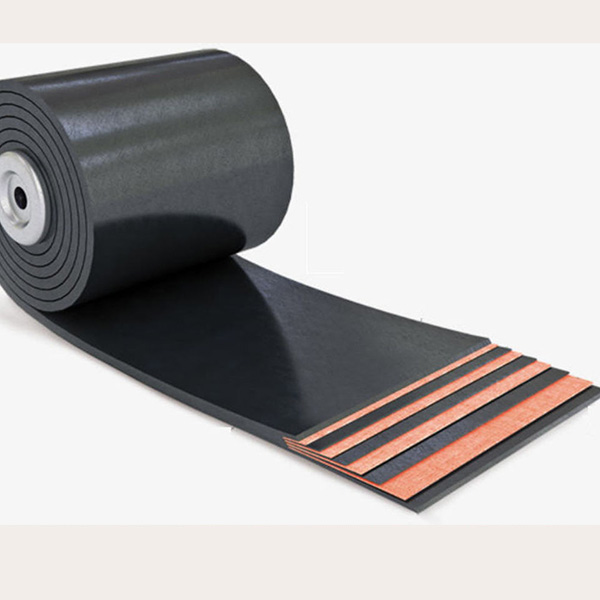
The efficient movement of bulk materials—from mined ores and agricultural products to packaged goods and airport luggage—is a cornerstone of global industry and logistics. Central to this movement is the conveyor belt, and within this category, the EP conveyor belt represents a dominant and versatile technology. The "EP" designation refers to its reinforcement carcass: woven fabrics made from E polyester warp yarns and P polyamide (nylon) weft yarns. This specific construction gives the EP conveyor belt a unique balance of key properties, including low elongation under tension, good impact resistance, and flexibility, making it a preferred choice for a vast range of medium to long-distance conveying applications across diverse sectors.
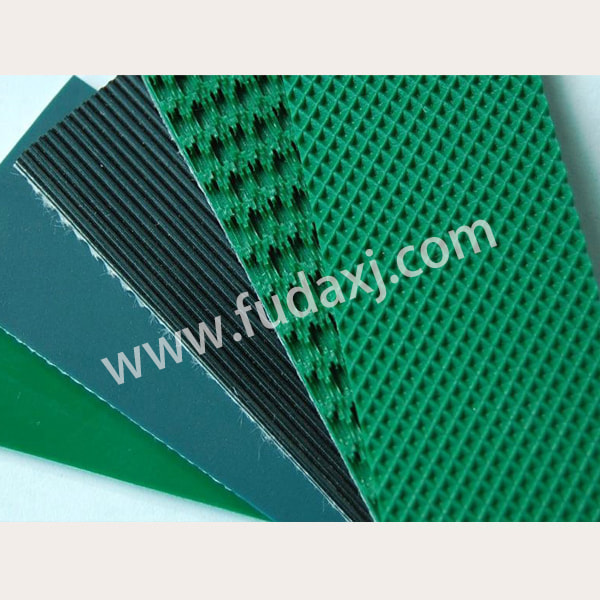
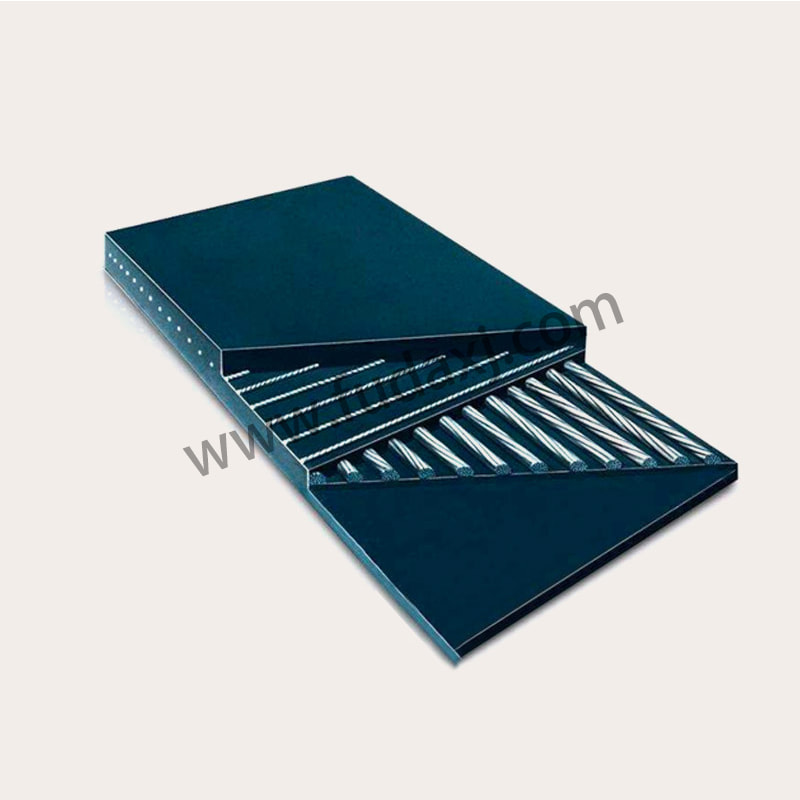
The engineering of an EP conveyor belt focuses on its layered construction. The core of the belt is one or more plies (layers) of the EP fabric. The polyester warp (lengthwise) yarns provide high tensile strength with small stretch, which is critical for maintaining belt tension and tracking over long centers without excessive take-up. The nylon weft (crosswise) yarns contribute to the belt's flexibility, impact resistance, and ability to form a trough over idlers. These fabric plies are bonded together with rubber compounds to create a solid carcass. The top and bottom of this carcass are then covered with rubber sheeting. The top cover, which carries the load, is formulated for resistance to abrasion, tearing, and the specific material being conveyed (e.g., resistance to gouging from sharp rocks or to oil). The bottom cover is designed for durability against friction with idlers and pulleys.
The operational advantages of the EP conveyor belt stem directly from its material composition. The low elongation characteristic of the polyester warp is a significant benefit. Unlike belts with all-nylon carcasses, which can stretch considerably under load, an EP conveyor belt maintains its length after the initial tensioning period. This reduces the need for frequent take-up adjustments, lesss energy loss from slippage, and contributes to stable, trouble-free operation. Simultaneously, the nylon weft provides the necessary flexibility for the belt to trough deeply, increasing load capacity, and to absorb the shock of loading without damage. This combination makes the EP conveyor belt a reliable and efficient solution for general-purpose conveying where control over belt stretch and good load support are required.
The development of EP conveyor belt technology continues to focus on enhancing durability, energy efficiency, and smart capabilities. Innovations include the use of advanced rubber compounds for covers that last longer under bad wear, reducing downtime and replacement costs. There is also a focus on designing covers with lower rolling resistance to reduce the energy consumption of the entire conveyor system. Furthermore, the integration of sensor technology directly into or onto the EP conveyor belt is an emerging trend. These sensors can monitor parameters like belt tension, wear, temperature, or even rip detection, enabling predictive maintenance and preventing catastrophic failures. As industries strive for greater automation and operational efficiency, the reliable and adaptable EP conveyor belt will remain an indispensable component of material handling infrastructure. Its ongoing evolution ensures it meets the growing demands for higher capacity, longer life, and smarter operation in the continuous movement of materials that fuels the global economy.
 Tel:0086-576-83070118
 Fax: 0086-576-83019528
 fudaxj@163.com
 Hongshan industrial Zone,Hongchou, Tiantai,zhejiang,317210,China